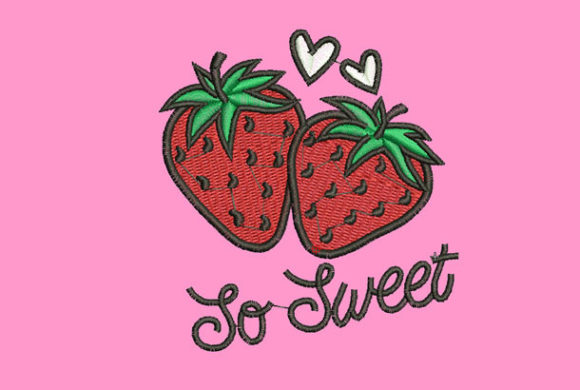
Cute Strawberry: A Designer's Review for Craft Fair Success
As an experienced embroidery designer preparing for a busy weekend at the local craft fair, my table strategy is everything. I need products that stop customers in their tracks, convey quality instantly, and are practical enough to produce in batches without burning out. This week, I am evaluating Cute Strawberry, a machine embroidery design described as a beautiful decorative element perfect for bags, clothes, and much more. The promise of a fun and easy-to-sew file that comes in various embroidery file formats is music to a small shop product owner's ears, but does it hold up under the scrutiny of a professional booth display?
First Impressions and Market Appeal
When I first loaded the Cute Strawberry digital embroidery file into my editing software, the immediate vibe was undeniably cheerful and inviting. In the world of handmade products, especially those targeting families and home decor, "cute" is a powerful selling point. This design feels less like a rustic farmhouse staple and more like a modern, pop-art accent that appeals to a broad demographic. It strikes a balance between playful and decorative, making it versatile enough for a child's backpack or a chic market tote.
For an Etsy seller or boutique maker, visual appeal is currency. Cute Strawberry has high contrast potential. If rendered in vibrant reds and greens against neutral fabrics, it pops. This makes it an excellent candidate for a printable mockup to test online listings before committing thread and fabric. The design's simplicity suggests it will be understood at a glance by a customer walking past a booth, which is critical for craft fair product success.
Strategic Product Placement for Maximum Sales
The real test for any embroidery file is how it performs on physical goods. Based on the description that it can decorate bags and clothes, I mapped out a production plan for my upcoming market stall.
- Tote Bags and Market Bags: This is the strongest contender for a tote bag design. A large hoop placement on a canvas tote allows the strawberry to serve as a focal point. Customers love personalized, reusable bags, and this motif adds instant character.
- Apron Embroidery: Placing Cute Strawberry on the bib of a kitchen apron creates a whimsical, gift-ready item. It transforms a standard utility item into a charming handmade product.
- Tea Towel Embroidery: While the design is decorative, one must consider the fabric texture of tea towels. Waffle weave or linen blends can sometimes distort small details. However, if the stitch density is appropriate, this could be a top seller for kitchen-themed bundles.
- Embroidered Patches: Creating iron-on or sew-on patches is a fantastic way to leverage this design. Patches allow customers to customize their own denim jackets or hats later, expanding your reach beyond pre-made items.
- Caps and Pouches: For curved cap surfaces, the design needs to be small enough to fit the front panel without distortion. Similarly, small fabric pouches benefit from a centered, cute motif that acts as a brand identifier.
Production Practicality and Batch Efficiency
In a commercial embroidery setting, time is money. The description notes that Cute Strawberry is "fun and easy to sew," which usually implies a manageable stitch count and logical color changes. For a craft fair vendor, repeatability is key. Can I stitch twenty of these while managing other orders? If the design requires excessive trimming or complex layering, it becomes a bottleneck. Fortunately, the straightforward nature of a strawberry motif suggests efficient production, allowing for higher inventory levels of finished products.
Photography is another crucial factor. This design photographs exceptionally well for online listings. Its bold shapes and likely vibrant thread colors translate beautifully in digital images, helping an Etsy seller stand out in search results. Whether used in a flat-lay printable mockup or styled on a model, the design assets provided seem robust enough to build a cohesive brand aesthetic around.
Critical Considerations for Quality Control
Despite its charm, every designer must approach new files with a critical eye. There are specific areas where Cute Strawberry requires careful testing before full-scale production.
- Stitch Density and Fabric Texture: Dense stitch areas can cause puckering, especially on lighter fabrics like tea towels or thin cotton shirts. It is vital to test the design on scrap fabric similar to your final product to ensure the fabric texture doesn't get overwhelmed.
- Small Details: If the design includes tiny seeds or leaf veins, these may lose clarity on textured towels or thick fabric. Verify that the details remain crisp at the intended size.
- Thread Contrast: The success of this design relies heavily on thread colors. On dark fabric, ensure you have a sufficient underlay or backing to prevent the base color from showing through the red stitches.
- Curved Surfaces: When applying this to caps, the curvature can distort circular elements. Always hoop correctly and use the right stabilizer to maintain shape integrity.
Enhancing Brand Value and Customer Engagement
Ultimately, Cute Strawberry is more than just a pattern; it is a tool for building brand consistency. By using this motif across various items—totes, aprons, and patches—you create a recognizable collection that encourages multiple purchases. A customer who buys a towel might return for the matching pouch. This design strengthens booth display strength by offering a unified theme that feels curated rather than random.
For those interested in the broader category of Family Quotes, this design serves as a perfect graphical complement. While it stands alone beautifully, it could also be paired with text in future projects to create custom family gifts, though one should always check the specific licensing terms regarding combining design assets.
Final Designer Notes and Recommendations
Before listing Cute Strawberry as a premium handmade product, I recommend a rigorous testing phase. Confirm the hoop size required to ensure it fits your equipment without re-hooping. Inspect the stitch density settings in your software; you may need to adjust pull compensation for stretchy fabrics. Create at least one real mockup to see how the light hits the threads in person, as this affects perceived value.
Most importantly, confirm commercial licensing before selling finished products. The description states the file can be used, but verifying the specifics of the commercial embroidery license protects your business. With the right stabilizer, thoughtful fabric selection, and strategic placement, Cute Strawberry has all the ingredients to become a bestseller at your next craft fair, delighting customers with its fresh, joyful aesthetic.