Mandala with Hearts: A Designer's Review for Real Projects
As someone who spends hours staring at screens analyzing stitch paths and density maps, I approach every new machine embroidery design with a mix of curiosity and skepticism. We've all seen those beautiful digital previews that turn into puckered messes on actual fabric. So, when I pulled up the files for Mandala with Hearts, I wasn't just looking at a pretty picture; I was evaluating a potential asset for my craft business and client projects. This isn't just a decorative ornament; it's a test of how well a designer can balance artistic flair with the mechanical realities of an embroidery machine.
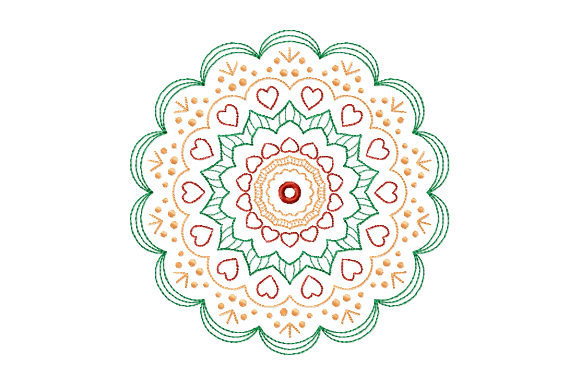
The first thing that strikes you about Mandala with Hearts is its mood. It feels warm, inviting, and slightly whimsical without being childish. The combination of red, orange, and green creates a vibrant energy that suggests autumn harvests, cozy holidays, or simply a burst of life in a neutral space. For an Etsy seller or boutique owner, color psychology is half the battle, and this palette hits a sweet spot between festive and everyday wearable art. The round layout is classic for a mandala, offering a sense of completeness and harmony that customers instinctively trust.
Visual Personality and Layout Dynamics
Diving deeper into the structure, the integration of heart motifs within the geometric symmetry of the mandala is executed with care. In many poorly digitized designs, organic shapes like hearts get lost when forced into rigid radial patterns. Here, the transition feels natural. The design relies heavily on what appears to be a mix of fill stitch for the broader colored sections and likely satin stitch or fine running stitch for the defining outlines and intricate details. This variation is crucial because it adds texture to the finished product. A design that is entirely fill stitch can look flat and heavy, but the interplay of different stitch types gives the eye places to rest and areas to explore.
For those creating printable mockups or digital product previews, the distinct separation of the red, orange, and green zones makes this design incredibly versatile. You can easily visualize how changing thread colors could shift the entire vibe—from a Christmas theme to a summer citrus look—without altering the underlying embroidery file structure. This adaptability is gold for a small shop product line where you need to offer variety without doubling your inventory of designs.
Real-World Application: From Screen to Stitch
Let's move from theory to practice. Imagine you are preparing a custom order for a client who wants a personalized tote bag for a teacher appreciation gift. You decide to use Mandala with Hearts as the central focal point. Because the design is round and relatively contained, it sits perfectly in the center of a canvas tote. The density seems substantial enough to hold up against the rough texture of canvas, ensuring the colors pop rather than sinking into the weave.
Alternatively, consider sweatshirt embroidery. This is where the design truly shines as a personalized gift. Placed on the left chest or as a larger back print, the warm tones complement heather grey, navy, or cream fleece beautifully. The "make a wish" sentiment mentioned in the description adds a layer of storytelling that you can leverage in your marketing copy. Customers don't just buy a sweatshirt; they buy a token of hope and warmth. For holiday embroidery projects, swapping the green for a deeper forest shade or the orange for gold could instantly transform this into a premium December item.
However, we must also talk about baby embroidery. While the hearts suggest suitability for nursery decor or baby blankets, caution is required. Babies have sensitive skin, and the back of the stitching needs to be clean. If the stitch density is too high in the center of the mandala, it could create a stiff patch that irritates a baby's neck or tummy. In this scenario, I would recommend using a soft cut-away stabilizer and perhaps trimming away excess backing after stitching to ensure the handmade product remains gentle.
Technical Considerations and Fabric Challenges
No design is universal, and Mandala with Hearts has its boundaries. One area requiring careful attention is the hoop size. While the description calls it a round decorative ornament, you must verify the exact dimensions in your software before committing to a project. If you are aiming for a small embroidered patch or a cap front, ensure the fine details of the inner hearts do not become muddy. Small text or tiny intricate corners often collapse if the design is scaled down too aggressively.
Fabric texture plays a massive role here. On a smooth quilting cotton or a tight-will twill, the definition between the red, orange, and green sections will be crisp. However, on textured fabrics like linen or waffle knit, those fine lines might get lost. Furthermore, stretchy fabrics present a challenge. If you attempt this on a thin jersey t-shirt without proper stabilization, the weight of the dense mandala could cause the fabric to pucker or distort over time, ruining the professional look of your custom apparel.
Dark fabrics are another consideration. The current colorway features bright reds and oranges which generally have good coverage, but the green might need an underlay check if you are stitching onto black or navy material. Always run a test stitch-out on scrap fabric that matches your final garment. This simple step saves you from wasting expensive blanks and protects your reputation as a reliable maker.
Commercial Viability and Brand Consistency
For commercial embroidery professionals and digital embroidery file sellers, the value of Mandala with Hearts lies in its versatility and emotional resonance. It fits seamlessly into branding for yoga studios, wellness coaches, or boutique cafes. The circular shape works exceptionally well for logos or badges. When used consistently across different products—say, a matching set of aprons and tea towels—it builds brand recognition and trust.
Buyer engagement often hinges on the perceived quality of the stitch work. A clean, well-digitized mandala signals professionalism. It tells the customer that you care about the details. Conversely, a design with poor pull compensation or jagged edges can devalue even the most expensive garment. Before listing this as a design asset or using it for client work, inspect the stitch path. Look for unnecessary jumps or trims that could slow down production time in a high-volume setting.
Final Verdict and Designer Notes
In conclusion, Mandala with Hearts is a strong contender for a wide range of projects, provided it is treated with the technical respect it deserves. It offers a delightful blend of geometry and emotion that appeals to a broad audience. To get the best results, keep these practical tips in mind:
- Test First: Always stitch a sample on your intended fabric type to check for puckering or registration issues.
- Check Contrast: Verify that the thread colors stand out against your specific fabric background, especially on darker materials.
- Stabilizer Selection: Match your stabilizer to the fabric weight; heavier fabrics may need less support, while knits require robust stabilization.
- Review Details: Zoom in on the smallest heart details to ensure they will stitch out clearly at your desired size.
- Licensing: Confirm the license terms before selling finished items or digital copies to ensure compliance with the creator's rules.
Whether you are creating a one-of-a-kind holiday gift or scaling up production for a craft fair, this design has the potential to be a standout piece in your portfolio. Just remember, the magic happens not just in the digital file, but in the careful execution on the machine. Happy stitching!